 John Alex
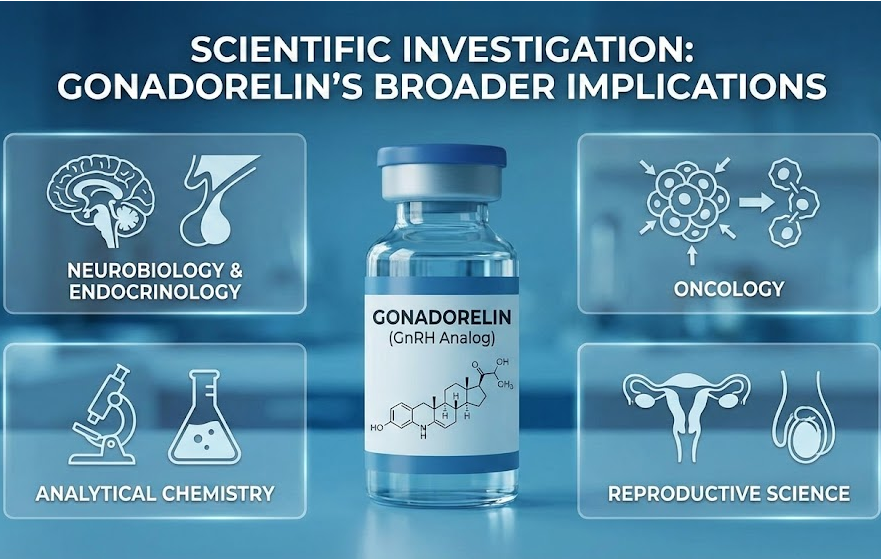
Gonadorelin, a synthetic analog of the naturally occurring gonadotropin-releasing hormone (GnRH), has garnered attention in various scientific disciplines due to its potential to influence hormonal regulation and cellular processes. While traditionally associated with reproductive science, emerging investigations suggest that Gonadorelin may have broader implications in areas such as endocrinology, oncology, neurobiology, and analytical chemistry.
Hormonal and Endocrine Research
Gonadorelin is believed to primarily function by stimulating the anterior pituitary gland to release luteinizing hormone (LH) and follicle-stimulating hormone (FSH), pivotal regulators of gonadal function. This action positions Gonadorelin as a valuable tool in endocrine research, particularly in exploring the dynamics of the hypothalamic-pituitary-gonadal (HPG) axis.
Research models have utilized Gonadorelin to investigate the pulsatile nature of GnRH secretion and its potential impact on gonadotropin release, providing insights into the regulatory mechanisms governing reproductive physiology.
Furthermore, Gonadorelin’s potential role is thought to extend to examining negative feedback loops involving sex steroids and inhibin. By modulating gonadotropin secretion, Gonadorelin seems to aid in understanding how these feedback mechanisms maintain hormonal balance within the multi-celled organism. Such investigations are crucial for unraveling the complexities of endocrine disorders and developing targeted research strategies.
Gonadal Function and Reproductive Biology Research
In the realm of reproductive biology, Gonadorelin’s impact on gonadotropin secretion has been hypothesized to have implications for studying gametogenesis and sexual differentiation. Laboratory research models have explored their potential to influence follicular maturation and spermatogenesis, processes integral to fertility and reproductive science.
Additionally, Gonadorelin’s involvement in puberty timing and reproductive cycle modulation is of interest, as it may provide insights into the developmental regulation of reproductive function. Investigations also suggest that Gonadorelin might interact with cellular pathways involved in reproductive development and hormonal feedback mechanisms. This interaction positions Gonadorelin as a subject of interest in studies examining hormonal imbalances and fertility adaptation, offering potential avenues for advancing reproductive science.
Oncology and Cellular Research
Beyond its role in reproductive biology, Gonadorelin has attracted attention in oncology research due to its potential interaction with cellular signaling pathways. Research models have hypothesized that Gonadorelin may influence tumor growth regulation, cellular differentiation, and hormonal adaptation in cancer contexts. Particularly, its potential impact on hormone-sensitive cancers, such as breast and prostate cancer, has been a focal point of investigation.
The peptide’s potential to modulate gonadotropin secretion dynamics positions it as a valuable tool in exploring the endocrine aspects of tumor progression and cellular adaptation. While the precise mechanisms remain under investigation, Gonadorelin’s potential to influence hormonal modulation in cancer models offers promising avenues for research exploration.
Neurobiology and Cognitive Function
Emerging research suggests that Gonadorelin may possess neuroprotective properties, particularly concerning cognitive functions in research models. Investigations indicate that this compound might reduce inflammatory responses and promote recovery following neural injuries in controlled experimental environments. Such potential opens promising avenues for future research exploration regarding neuroprotection and cognitive science mechanisms.
Additionally, studies have explored the possibility that intermittent exposure of pituitary cells to Gonadorelin might serve to reactivate the HPG axis in models of hypothalamic dysfunction. This reactivation process, hypothesized to involve a series of simulations starting with the pituitary gland prompting the production of LH and FSH, could provide insights into therapeutic strategies for neurodegenerative conditions.
Analytical Chemistry and Diagnostic Applications
In the field of analytical chemistry, Gonadorelin’s unique properties have been leveraged to develop innovative diagnostic tools. For instance, researchers have proposed a biomimetic enzyme-linked immunosorbent assay (BELISA) targeting Gonadorelin, utilizing molecularly imprinted polymers to enhance detection sensitivity. Such advancements facilitate the precise quantification of Gonadorelin levels, contributing to the development of robust diagnostic assays.
Moreover, the peptide’s potential role in stimulating gonadotropin release has been theorized to have implications for diagnostic tests assessing pituitary function. By evaluating the response to Gonadorelin exposure, researchers can gain perspectives into the integrity of the HPG axis, aiding in the diagnosis of various endocrine disorders.
Future Research Avenues
While existing investigations suggest promising implications for Gonadorelin, further research is essential to elucidate its mechanisms and potential applications fully. Future studies may focus on exploring the peptide’s interaction with cellular signaling pathways and its implications in various physiological contexts. Additionally, researchers might investigate Gonadorelin’s potential role in metabolic, hormonal balance, and adaptive responses within the organism.
As scientific inquiry continues to advance, Gonadorelin remains a compelling subject in diverse research domains. Its multifaceted properties position it as a valuable tool for unraveling complex biological processes and developing targeted research strategies. The ongoing exploration of Gonadorelin’s potential underscores the dynamic nature of scientific discovery and the continuous quest to understand the intricacies of hormonal regulation and cellular function.
Conclusion
Gonadorelin’s diverse roles across various scientific disciplines highlight its significance beyond traditional reproductive contexts. Through continued research and exploration, the peptide has been hypothesized to offer novel insights into the regulation of hormonal systems, cellular processes, and diagnostic methodologies, paving the way for advancements in multiple areas of scientific inquiry. Researchers may find peptides for sale with a credit card online.