 John Alex
Guest posting is still one of the fastest ways to earn relevant mentions, referral traffic, and authority—yet it is also one of the easiest ways to waste budget on low-quality placements. A good guest post marketplace reduces the risk by turning a messy email-outreach process into a searchable catalog with clear rules, metrics, and predictable delivery.
This article compares seven established platforms and explains how to choose the best guest post marketplace for a specific niche, country, and campaign goal (last checked on December 31, 2025). The focus is practical: what each marketplace does well, where it tends to fall short, and how to avoid the most common “paid placement” mistakes.
What a guest post marketplace is (and what it is not)
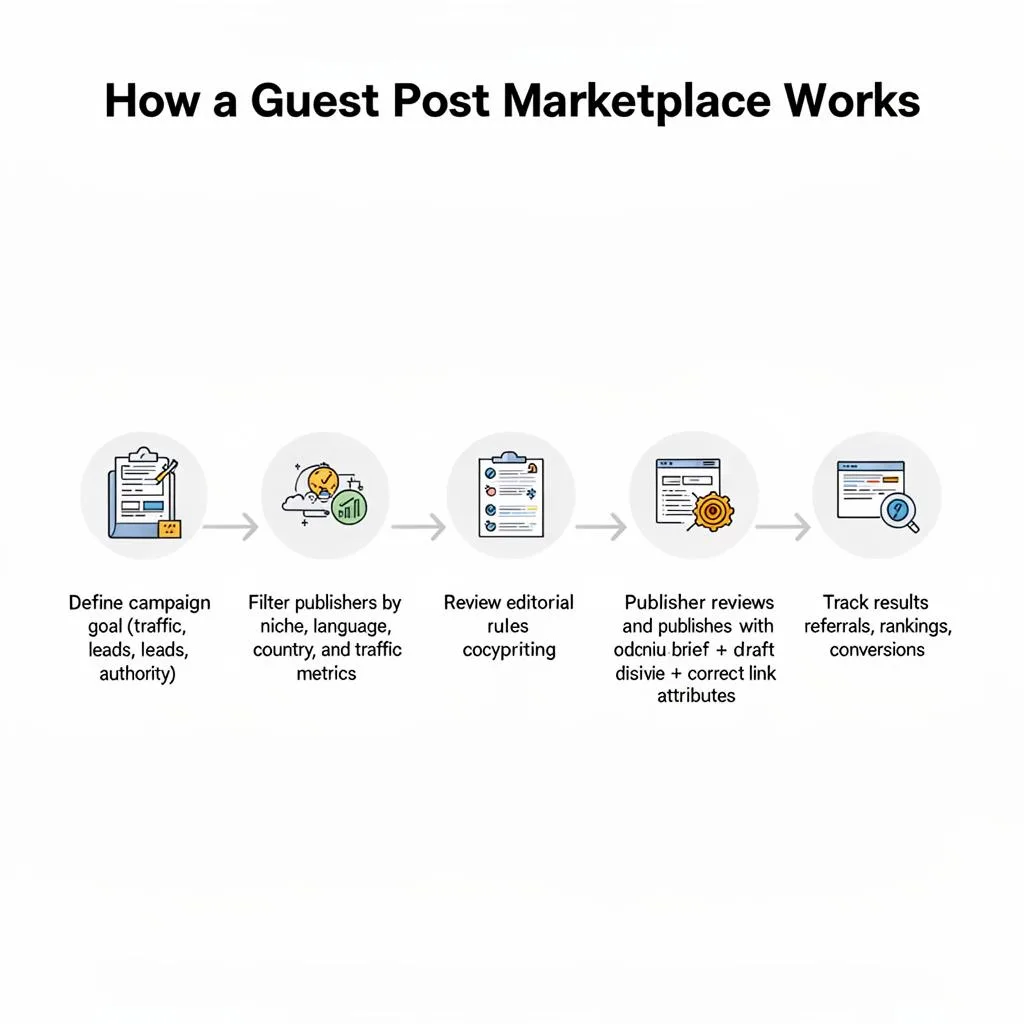
A guest post marketplace is a platform that connects advertisers (brands, agencies, in-house Search Engine Optimization (SEO) teams) with publishers that accept sponsored articles or guest posts. In practice, a marketplace standardizes the parts that usually break in manual outreach: transparent pricing, availability, editorial rules, expected turnaround time, and proof of publication.
What it is not: a guarantee of rankings. Search engines can ignore or devalue links, and “paid placements that try to manipulate ranking signals” can create compliance issues. If a placement is sponsored, publishers should qualify outbound links with appropriate rel values such as rel="sponsored" (or nofollow) so the relationship is clear to crawlers.
The safest mental model: treat each placement as a real marketing asset (audience + message + credibility) and treat links as a possible side effect, not the only reason the content exists.
How this ranking was built
This ranking targets marketers who want repeatable placements with fewer surprises. Each platform was evaluated on: (1) network breadth (languages, countries, niches), (2) transparency (what metrics and rules are visible before purchase), (3) workflow friction (briefing, approvals, turnaround), (4) quality controls (verification, moderation, guarantees), and (5) cost predictability (clear pricing models, fewer hidden fees).
Marketplaces are also region-biased by design—some dominate in Central and Eastern Europe, others are stronger in the US, and some are built for global PR distribution. To keep the list actionable, the selection favors platforms that publicly present themselves as catalog-driven marketplaces for sponsored content or guest posts (rather than pure “done-for-you outreach”). Independent comparison pages and roundups often list many of the same brands, which is a useful cross-check that these are established platforms with ongoing activity.
Important limitation: catalog size alone does not equal quality. The best outcomes come from disciplined selection and strong briefs, regardless of platform.
Top 7 guest post marketplaces (ranked)
1. pressbay.net
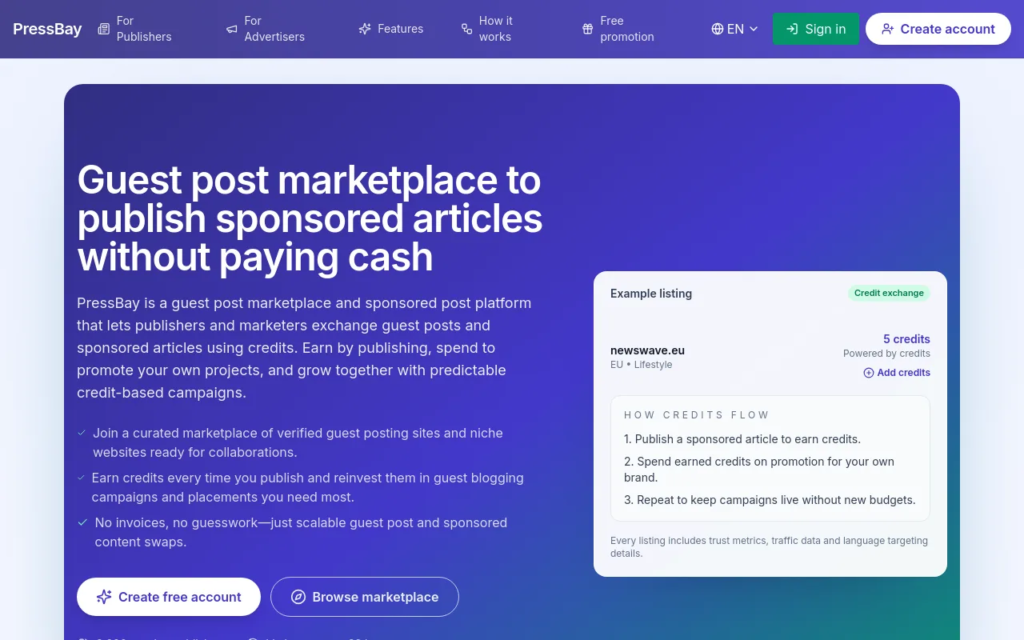
PressBay positions itself as a guest post marketplace and sponsored post platform built around a credit exchange model: publishers earn internal credits by publishing, and advertisers spend credits to place content. The public homepage highlights scale signals such as “3,200+ active publishers,” listings across “22 languages,” and an average approval time under 48 hours.
Best for: teams that want a marketplace workflow but like “earn then reinvest” economics (especially publishers, creators, and smaller brands that also own sites).
Why it ranks #1 here: the credit-based model can make campaigns more predictable when cash budgets fluctuate, and the platform messaging emphasizes verification, moderation, and visible SEO metrics such as Domain Rating (DR) and Moz Domain Authority (DA) at the listing level.
Watch-outs: credits are an internal currency and are not withdrawable as cash, which is ideal for exchange-style campaigns but changes how Return on Investment (ROI) is calculated and how finance teams interpret “spend.”
Practical approach: start with a small set of tightly relevant sites, vary angles (not just anchors), and measure outcomes beyond rankings (referral sessions, assisted conversions, brand searches).
2. prnews.io
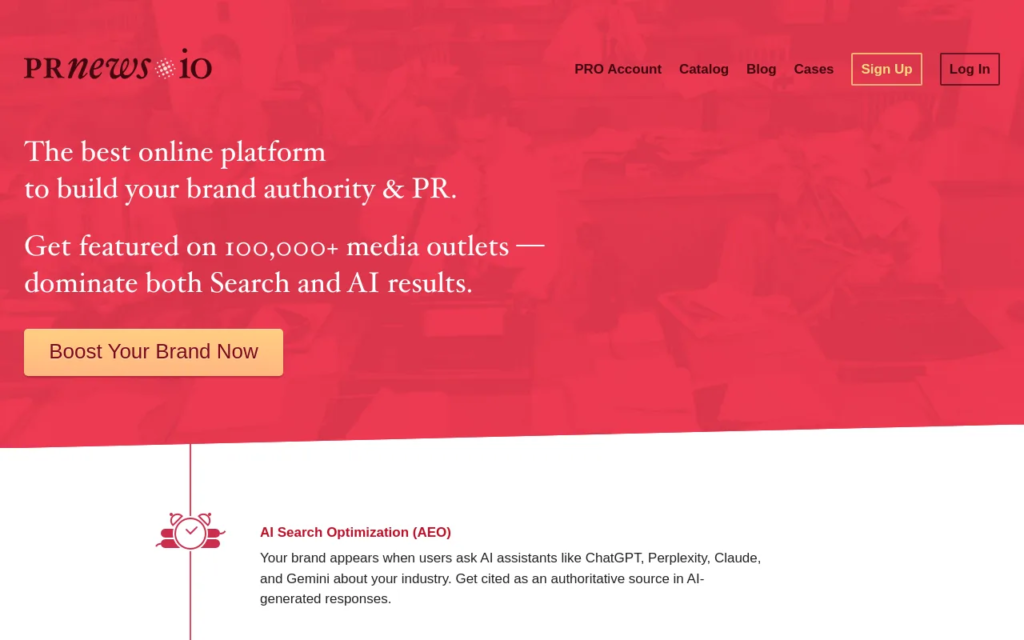
PRNEWS.IO presents itself as a global sponsored media placement platform with a catalog approach. It claims access to “100,000+ media outlets” and coverage across “175 countries,” and it also markets “AI Search Optimization (AEO)” alongside classic Public Relations (PR) and SEO outcomes.
Best for: international campaigns where brand mentions and broad distribution matter as much as raw link equity, plus teams experimenting with “AI answer visibility” positioning.
Strengths: global reach messaging, a straightforward “choose → brief → publish” flow, and a PR-leaning catalog that can support announcements and evergreen thought leadership.
Watch-outs: very large catalogs can include wide quality variance. The safest workflow is to predefine thresholds (niche relevance, traffic signals, editorial guidelines) and avoid aggressive, keyword-heavy anchors.
3. collaborator.pro
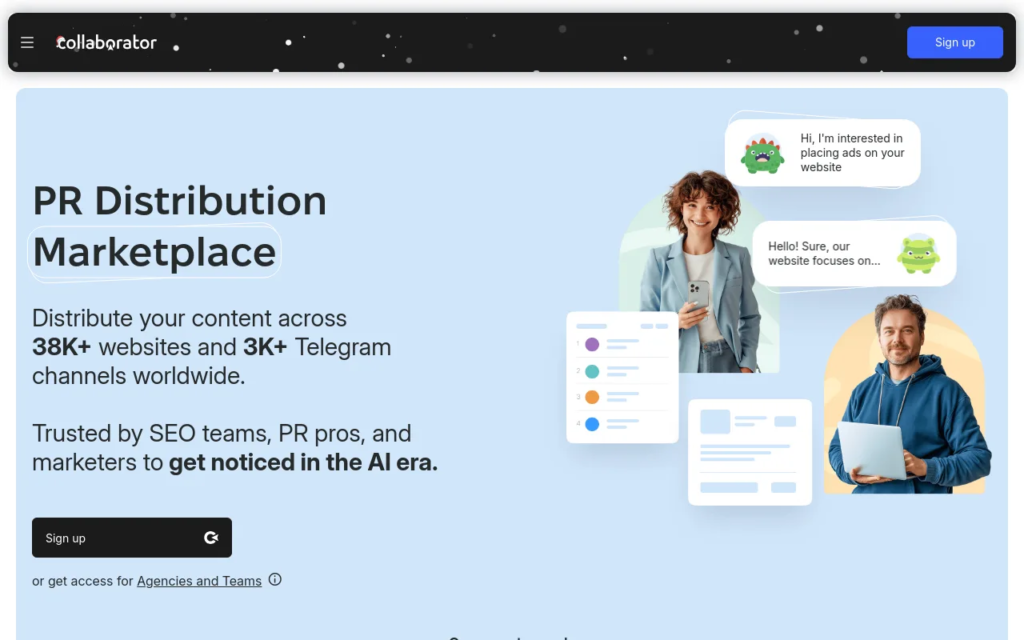
Collaborator positions itself as a marketplace for PR distribution and content placements across websites and Telegram channels. On its public pages, it states “38,000 sites and 3,000 Telegram channels” worldwide, and it highlights inventory verification signals such as “7,000+ websites with real Google Analytics (GA) data” and “5,500+ sites verified by Google Search Console (GSC).”
Best for: agencies that want a large catalog with many filters and that value analytics proof at the inventory level.
Strengths: scale, filtering depth, and verification messaging that helps reduce the time spent screening obviously weak placements.
Watch-outs: a “huge catalog” rewards discipline. Without strict filters, it is easy to drift into quantity-first placements that do not move meaningful business metrics.
4. whitepress.com
WhitePress describes itself as an automated platform for SEO and content marketing that lets users publish articles in “thousands of portals worldwide,” and it also offers native copywriting services.
Best for: content marketing teams (often in Europe) that want an organized publication pipeline and optional copywriting support.
Strengths: automation, a clear connection to content workflows, and a “publish at scale” approach that fits PR + SEO hybrid strategies.
Watch-outs: “scale” can produce repetitive briefs. Rotate angles, match the story to each publication, and prioritize content that could stand alone as a legitimate marketing piece.
5. linkhouse.co
Linkhouse is strongly positioned in Poland and emphasizes sponsored articles and related link-building formats. On its site, it highlights “the largest database of sites in Poland” and frames its offering around finding opportunities, executing placements, and reporting—plus visibility in both Google and AI tools.
Best for: Polish-language campaigns and Central/Eastern European link building where local inventory and practical planning tools matter more than global reach.
Strengths: regional depth, multiple placement formats (including mentions in existing articles), and a productized workflow for planning and measurement.
Watch-outs: for multilingual campaigns outside Poland, a more global catalog may be more efficient as the first stop.

6. getfluence.com
Getfluence markets itself as a global marketplace for sponsored content campaigns and highlights access to “over 45,000 premium media” in its catalog, as well as a client base of “2,000+ international companies and agencies.”
Best for: brands and agencies that prefer a “premium media catalog” angle and want centralized media buying with reporting.
Strengths: premium positioning, a global footprint narrative, and marketplace framing that aligns with PR-first placements as well as SEO support.
Watch-outs: premium inventory usually means premium cost. Reserve higher-priced placements for cornerstone assets (studies, announcements, major product pages) and use mid-tier placements for supporting topics.
7. accessily.com
Accessily presents itself as a guest post and backlink marketplace “built for SEOs,” and it highlights Trustpilot visibility and being “trusted by 50,000+ SEO professionals.”
Best for: SEO teams that want a fast, “no outreach” workflow, often with a United States (US)-leaning inventory.
Strengths: speed, a marketplace-style experience, and packaged services that help busy teams launch campaigns quickly.
Watch-outs: frictionless purchasing can make it easy to skip editorial nuance. For long-term safety, insist on real topical alignment and avoid aggressive exact-match anchor strategies.
How to choose the right platform for the next campaign
The fastest way to choose a guest post marketplace is to start with three constraints: geography, niche fit, and the acceptable level of process risk.
- Geography: if most revenue is in one country, pick the marketplace with the deepest publisher inventory there. Poland-focused catalogs can outperform global catalogs for Polish Search Engine Results Pages (SERPs) because the publisher base is locally relevant.
- Niche fit: “general news” placements are rarely optimal for specialized businesses. A smaller catalog with genuinely niche publishers often beats a massive catalog of generic sites.
- Process risk: some teams prioritize strict moderation and verification; others prioritize volume and accept more manual screening.
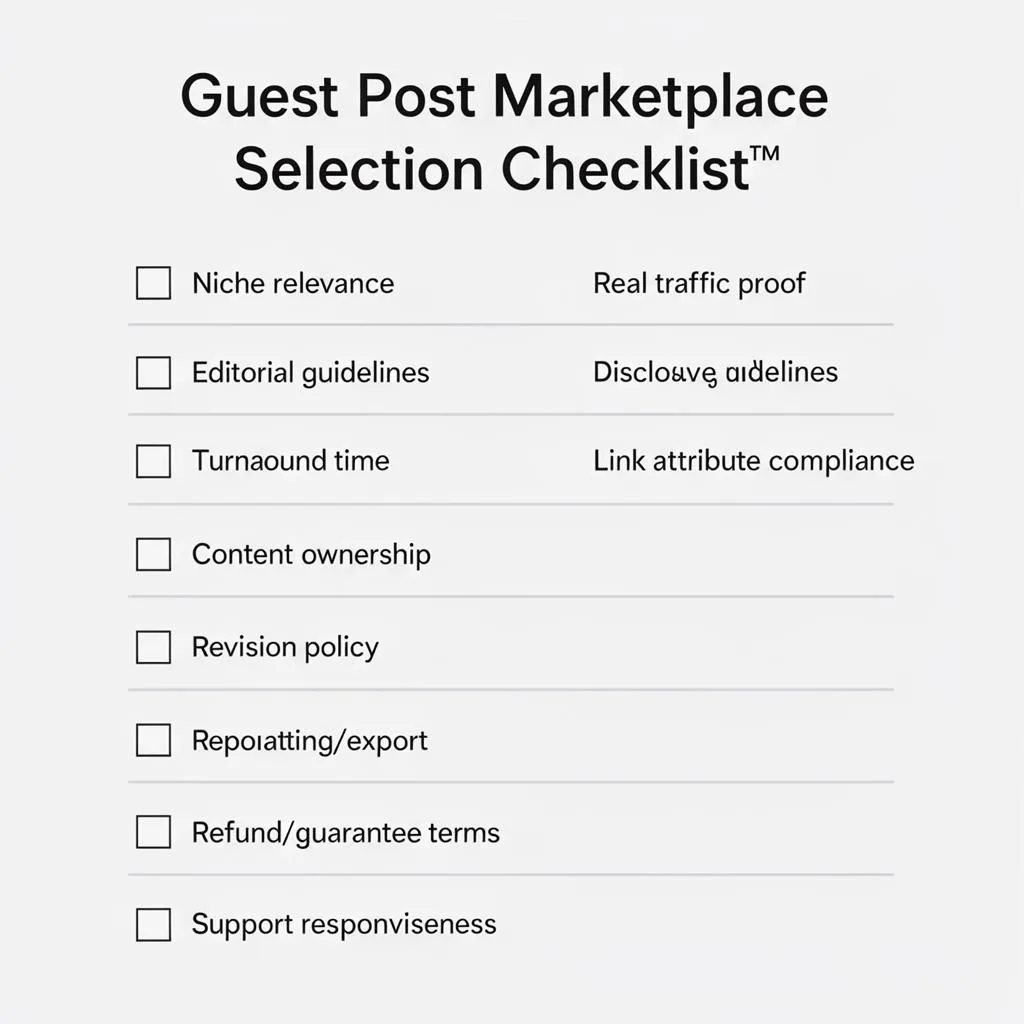
Then run a pilot: 3–5 placements, one month of lead time, and a single reporting template (publication URL, disclosure, link attributes, target page, anchor style, estimated traffic, actual referral sessions, and assisted conversions). Keep the goal simple: validate fit before scaling.
Quality signals that matter more than the platform name
Marketplaces are distribution rails. The long-term value comes from choosing placements that would still make sense if links did not exist. These signals tend to separate “marketing assets” from “link transactions”:
- Editorial friction: a real publisher asks questions, may request changes, and may refuse misaligned topics.
- Audience fit: a good placement sends referral traffic that behaves like real users (time on site, pages per session, conversions).
- Clear sponsorship rules: sponsored placements should be labeled and the relationship should be machine-readable via rel attributes where appropriate.
- Topic clusters: placements that reinforce a topical theme over time usually outperform random one-off links.
Use marketplaces to reduce procurement friction, but use editorial strategy to reduce algorithmic risk.
Common pitfalls (and how to avoid them)
- Over-optimizing anchors: exact-match anchors at scale is a classic footprint. Rotate anchors naturally (brand, URL, partial match, topical phrases) and keep it readable.
- Buying “metrics” instead of outcomes: Domain metrics (DR, DA) help screen inventory, but outcomes are traffic, leads, demos, and sales. If a placement never sends qualified users, it is mostly vanity.
- Ignoring indexation: if articles do not get indexed, links rarely matter. Favor publishers with strong internal linking and fresh crawl activity.
- Reusing the same brief everywhere: templated content is easier to spot and less likely to earn engagement. Tailor angles and examples to each publication.
FAQ
Is a marketplace safer than manual outreach? It can be safer because rules, pricing, and metrics are clearer upfront. Safety still depends on selection discipline and avoiding manipulative patterns.
Should sponsored placements use rel=”sponsored”? Google’s documentation recommends qualifying paid links with rel values such as nofollow or sponsored to clarify the relationship.
Which platform is best for beginners? Beginners usually do best with a marketplace that shows metrics transparently and has clear editorial rules. A small pilot and a strict checklist beat “going big” from day one.
CTA: shortlist two platforms, run a 3–5 placement pilot, and keep only what drives measurable outcomes. If only two links are allowed in a document and a quick starting point is needed, start with pressbay.net and compare it against prnews.io for the exact niche and target country. Which country (and niche) matters most for the next campaign?
For More Update and Stories Visit: The Europe Times