 John Alex
Europe’s energy landscape is changing faster than ever. As the continent faces rising utility costs and increasing pressure to reduce carbon emissions, homeowners are taking the lead in adopting renewable energy. One solution, in particular, is reshaping the way households generate and consume electricity — solar panels for homes.
From suburban houses in England to villas in Spain and eco-apartments in Germany, homeowners are recognising that solar isn’t just about going green; it’s about gaining control over their energy future.
Why Solar Power Is the Smart Choice for Modern Households
The growing adoption of solar energy across Europe stems from three simple factors: affordability, efficiency, and sustainability. What was once an expensive and complex technology has become accessible to the average homeowner.
Advancements in photovoltaic (PV) technology have improved efficiency dramatically, even in regions with limited sunlight. Meanwhile, governments across the EU continue to support the transition through tax rebates, feed-in tariffs, and net metering programs.
For many, investing in solar panels for homes is now both a financial and environmental decision — one that aligns with Europe’s broader mission to achieve net-zero emissions by 2050.
How Solar Panels Work in Residential Settings
At their core, solar panels harness sunlight to produce clean, renewable electricity. The process is simple yet highly effective:
- Solar cells capture sunlight, converting it into direct current (DC).
- An inverter transforms the DC power into alternating current (AC), used by household appliances.
- The system powers the home, while any excess electricity can be stored in batteries or sent back to the grid.
This seamless integration means homeowners can reduce grid reliance while stabilising their energy costs — a key advantage in today’s volatile energy markets.
The Financial Payoff of Going Solar
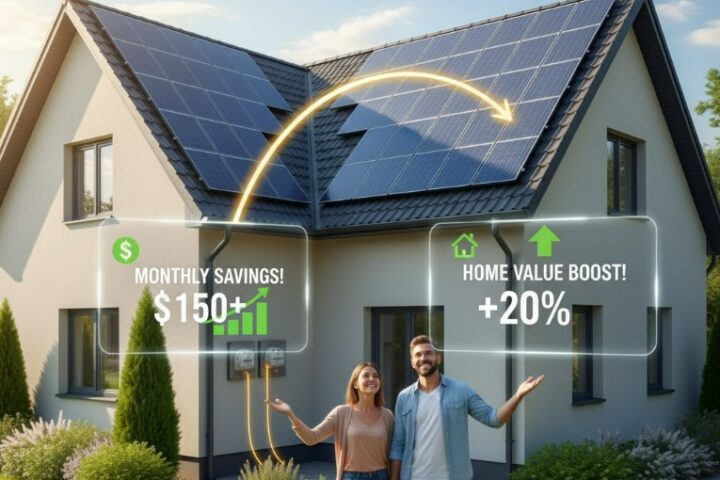
One of the strongest arguments for solar adoption is economic. Across Europe, residential energy prices have risen steadily in recent years. In contrast, the cost of installing solar systems has dropped by over 60% since 2010.
A well-sized solar system can save homeowners between 50% and 80% on electricity bills annually. For homes that include a battery system, these savings can increase even further, offering near-total energy independence.
When paired with net metering incentives, many households even generate surplus energy that earns credit from their utility providers — turning rooftops into revenue sources.
Understanding Solar Costs and System Sizing
While every home is unique, solar system costs depend on several key factors: location, roof size, energy use, and whether storage batteries are included. A comprehensive analysis of residential solar panel costs in the UK 2025 highlights how installation prices continue to fall while system efficiency improves, making solar more accessible to middle-income households than ever before.
The average payback period for home systems now sits between five and seven years, after which the electricity produced is essentially free for decades.
Environmental Benefits Beyond Cost Savings
Beyond economics, solar power plays a critical role in Europe’s transition to clean energy. Each household that switches to solar can reduce its annual carbon footprint by up to one tonne of CO₂ — equivalent to planting around 40 trees per year.
By embracing renewable energy at the domestic level, homeowners collectively contribute to reducing the continent’s dependency on imported fossil fuels, increasing energy resilience and environmental stability.
Practical Considerations Before Installing Solar Panels
Before investing, homeowners should evaluate several important factors:
- Roof suitability: South-facing roofs receive optimal sunlight exposure.
- Shading and obstructions: Minimise shadows from trees or nearby buildings.
- Energy usage: Review your monthly electricity consumption to determine the right system size.
- Battery options: Consider whether energy storage suits your lifestyle and budget.
- Accredited installers: Always use certified professionals for installation and maintenance to ensure long-term reliability.
With proper planning, homeowners can maximise both performance and savings from their solar systems.
The Future of Residential Solar in Europe
The evolution of solar technology is paving the way for smarter, more connected homes. Integration with electric vehicle (EV) charging, AI-driven energy management, and home automation systems is transforming how we consume and store electricity.
Future communities may operate as “microgrids,” sharing excess solar power among neighbours and creating decentralised, resilient networks that redefine urban sustainability.
As governments strengthen renewable policies and consumers embrace green technologies, the outlook for solar adoption in Europe remains bright — both literally and figuratively.
Conclusion
The widespread adoption of solar panels for homes across Europe marks a new era in sustainable living. It empowers individuals to take charge of their energy needs, reduce costs, and contribute meaningfully to climate action.
With efficiency rising and costs falling, solar power has transitioned from an environmental statement to an economic necessity. Each rooftop that harnesses sunlight represents one small but powerful step toward a cleaner, more energy-secure Europe.
For More Update and Stories Visit: The Europe Times